Publications

Our research contributions to computer graphics and related fields.

Deep Illumination–Guided Light Probe Placement

A. Tarasidis, A. A. Vasilakis and I. Fudos

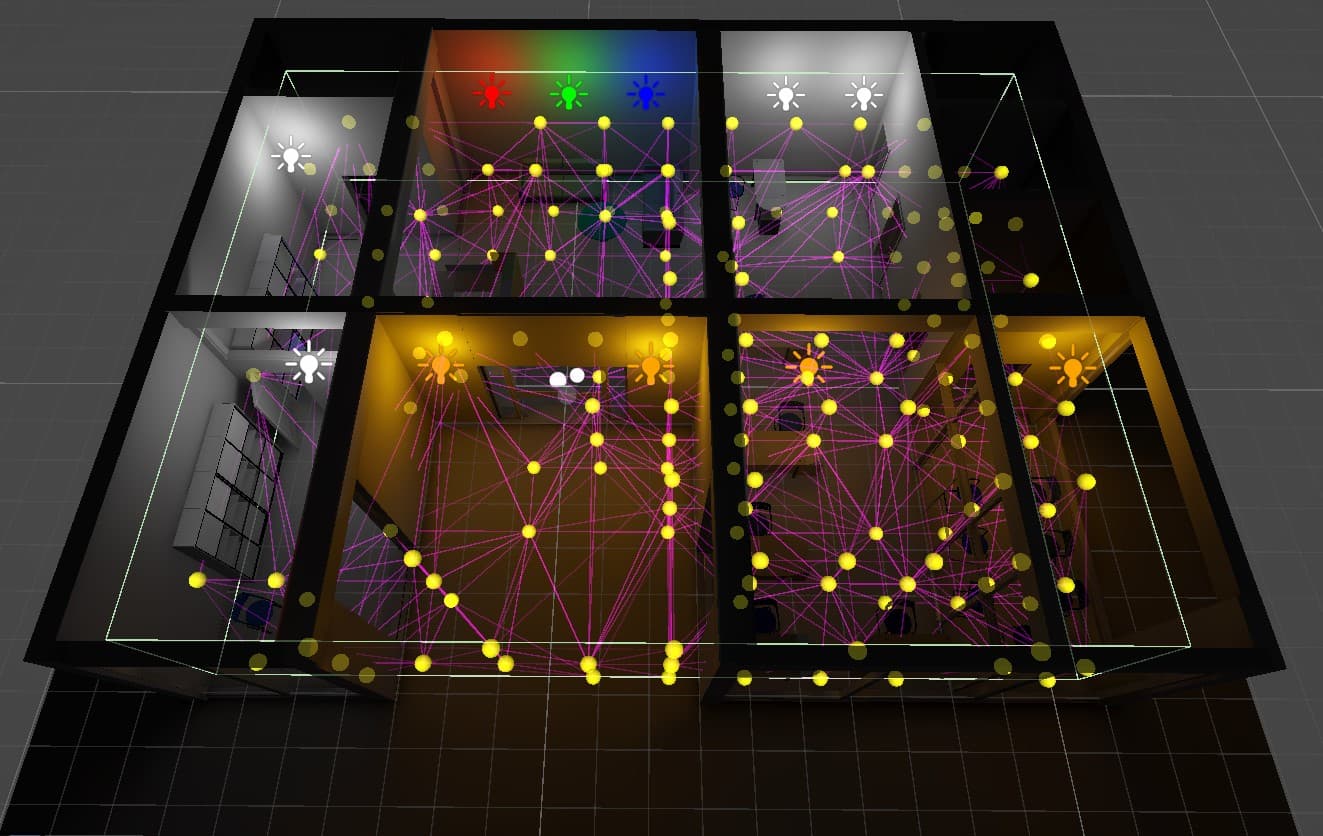
This work introduces a neural-network-based method to automatically place light probes efficiently under diverse lighting conditions, preserving the scene’s indirect illumination. It delivers probe layouts much faster than traditional methods while maintaining high illumination quality.

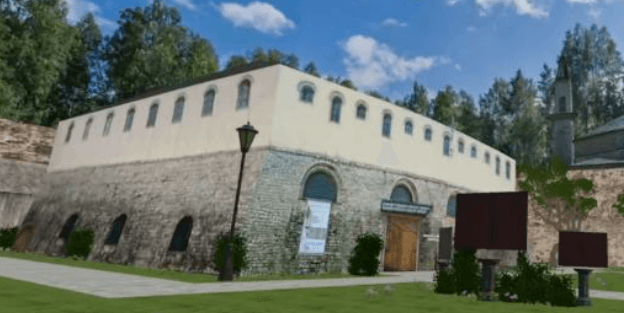
Exploring the Contemporary History of Epirus through an Immersive Virtual Reality Experience

I. Fudos, S.D. Koutsikou, V. Stamati, I. Kyriazis, and M. Papadopoulou

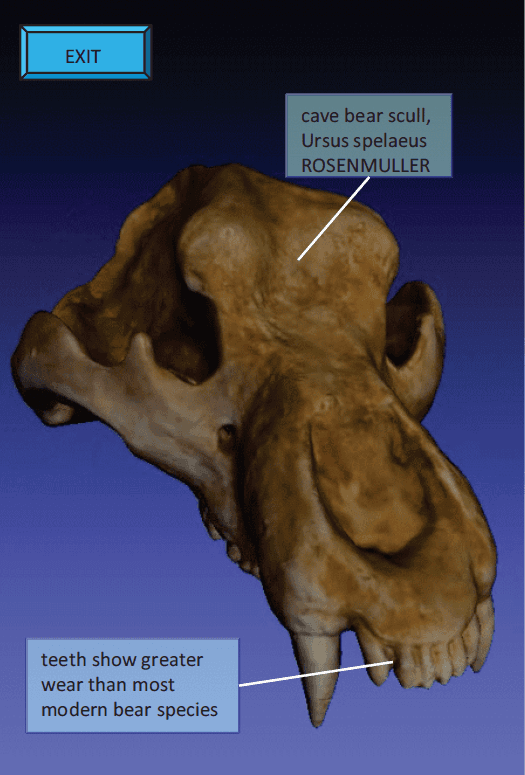
This paper presents an immersive virtual reality experience of the cultural heritage and contemporary history of the Epirus region in Greece, built using 3D modeling, photogrammetry, and 3D scanning of artifacts from the Historical Archives and Museum of Epirus. By integrating digitized objects—organized into themes such as athleticism, agriculture, art, and everyday life—into VR scenarios, the project enables users to explore historically informed environments and narratives in an engaging, educational way.

Traditional and Neural Order-Independent Transparency

Grigoris Tsopouridis, Christos Georgiou-Mousses, Ioannis Fudos, David Corrigan, Tobias Alexander Franke

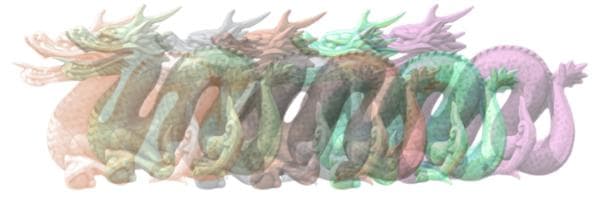
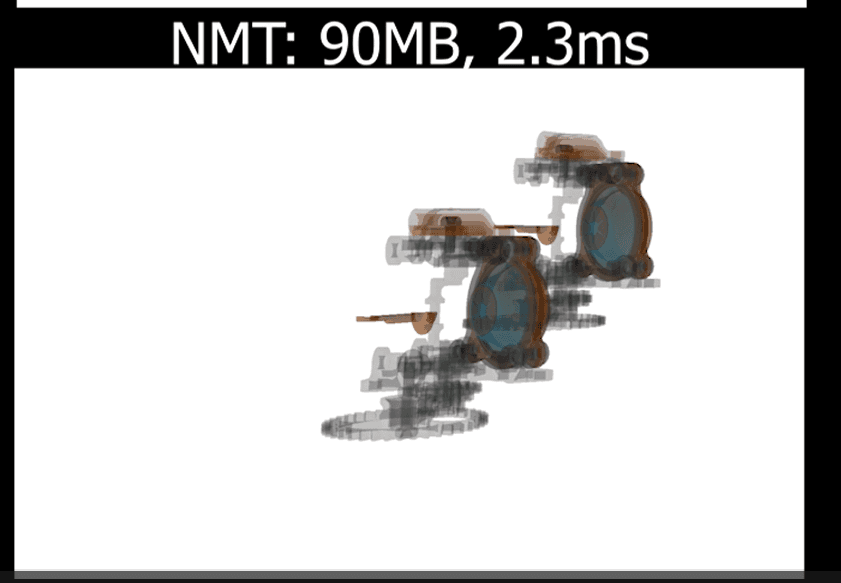
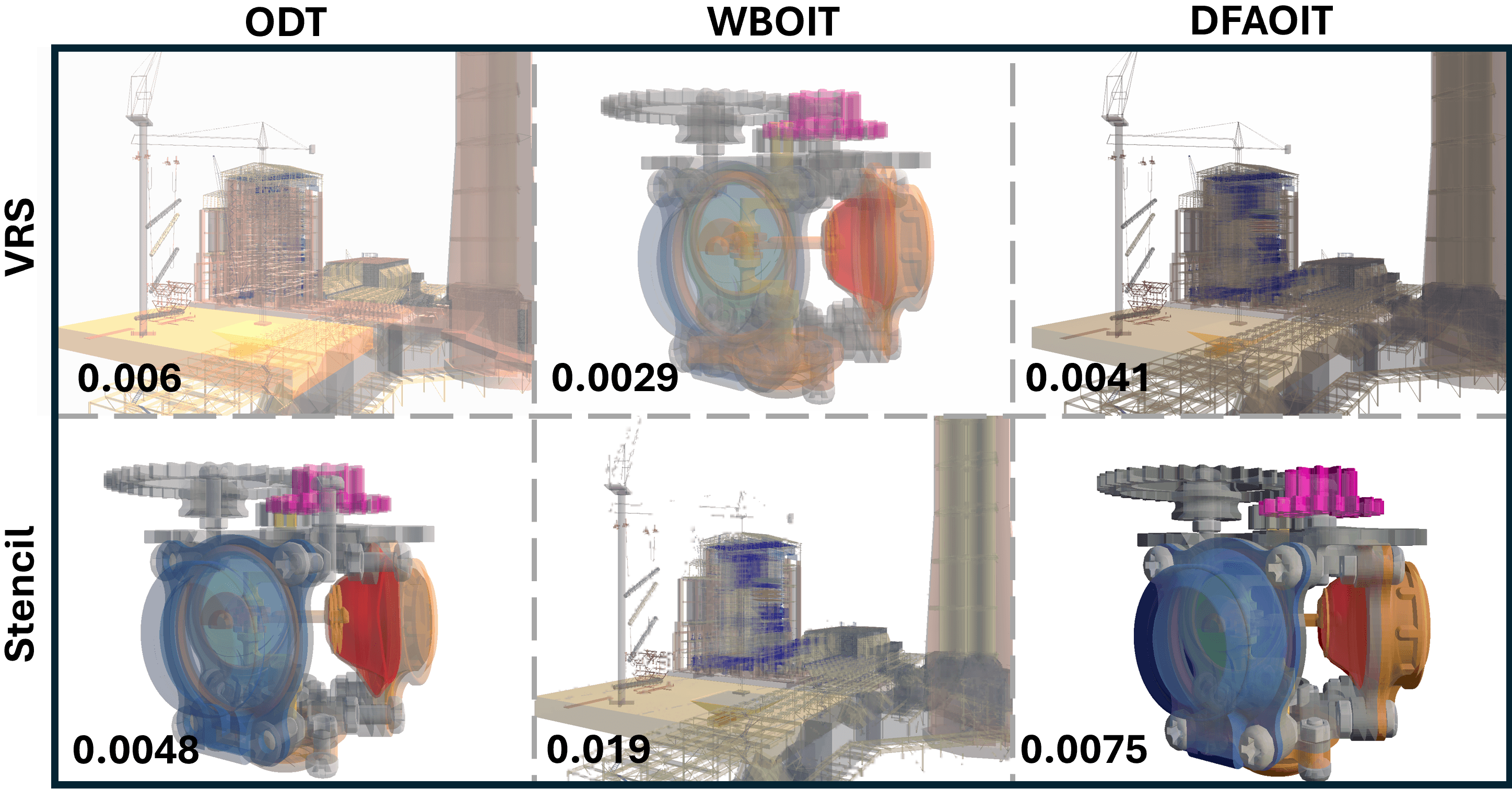
Order independent transparency (OIT) is a technique in computer graphics that allows for accurate rendering of transparent objects without the need to sort them in a specific order based on their depth. The tutorial will provide an overview of traditional (exact, approximate and hybrid) and deep learning approaches to OIT and examine their scope, performance and accuracy.

Deep fusible skinning of animation sequences

A. Moutafidou, V. Toulatzis and I. Fudos

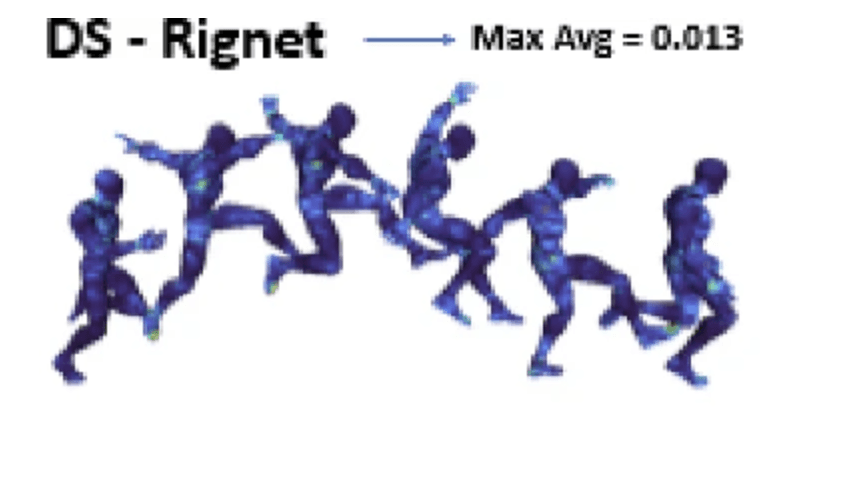
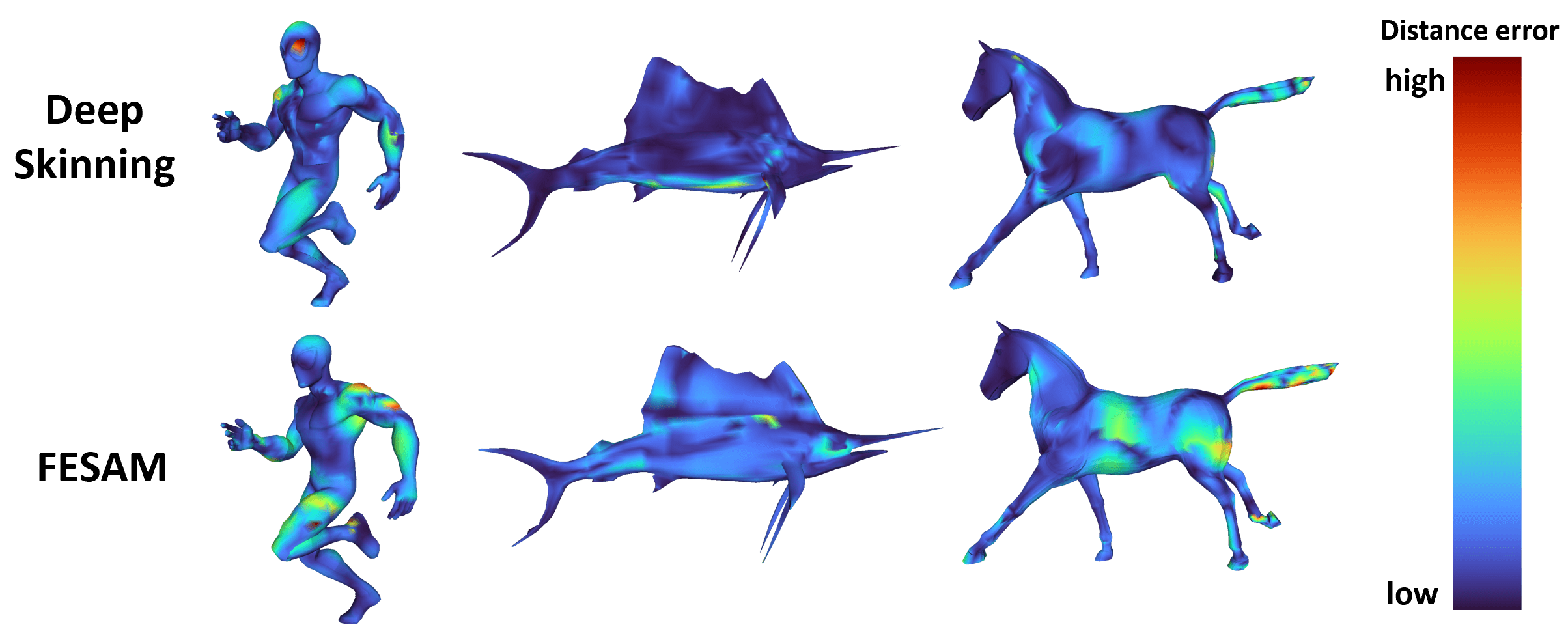
The paper presents a deep learning method that automatically assigns vertices to proxy bones based on vertex trajectories, enabling Linear Blend Skinning (LBS) for unseen animated sequences without existing skeletons or rigs, achieving higher-quality approximations with fewer bones and thus better compression and lower streaming bandwidth. It also introduces a persistent bone labeling scheme that reduces error, improves visual quality, and supports fusing multiple LBS schemes, demonstrated by successfully combining the proposed method with the state-of-the-art Rignet rigging approach.

Graph Constructive Geometric Constraint Solving: Challenges and Machine Learning

I. Fudos and V. Stamati

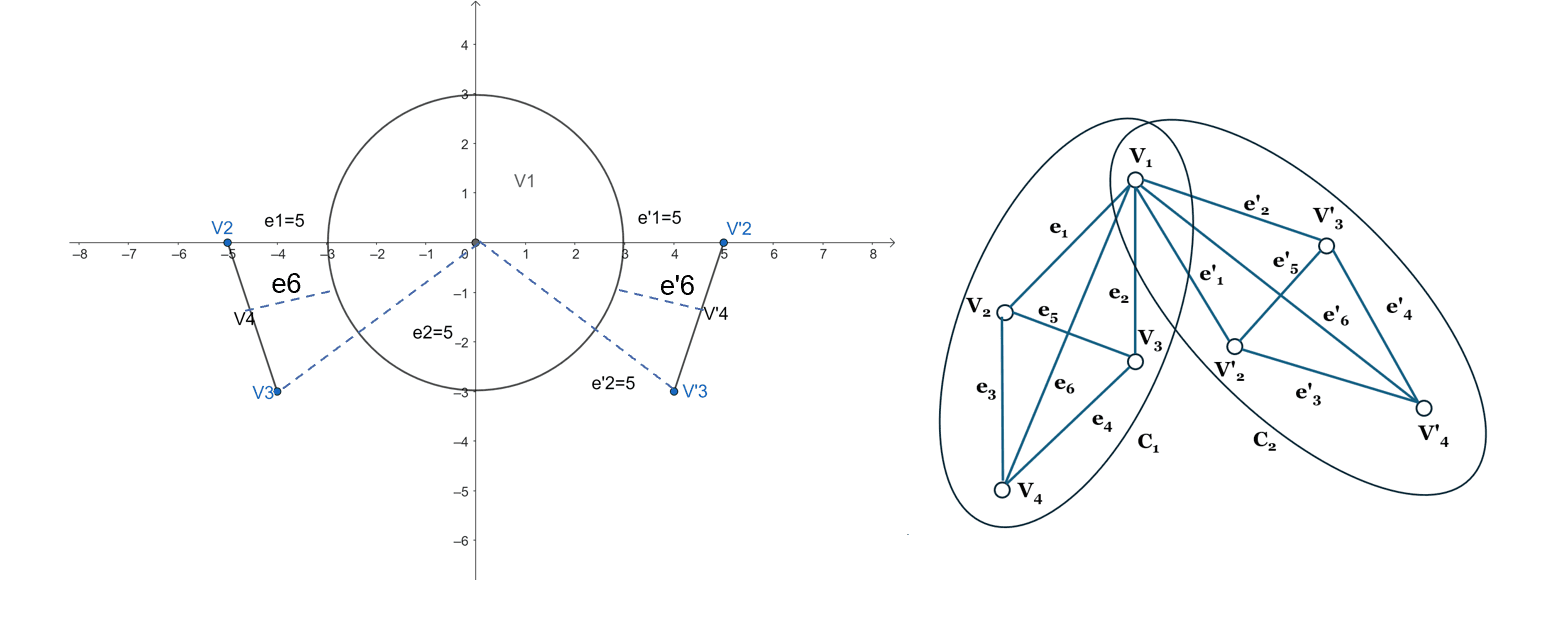
Computer-aided design (CAD) places significant emphasis on crafting precise and durable models that seamlessly adhere to constraints set forth by designers and/or specific application domains. Geometric constraint solving (GCS) plays a pivotal role in ensuring the fulfillment of these criteria. This paper delves into the contemporary research problems encountered within traditional GCS methodologies, particularly when combining graph algorithms (termed graph constructive GCS) and machine learning. Specifically, it investigates challenges about well-constrainedness in both 2D and 3D GCS scenarios. Furthermore, it proposes and scrutinizes an AI-assisted root navigation approach for graph-based constructive constraint-solving problems.

Neural Moment Transparency

Grigoris Tsopouridis, Andreas-Alexandros Vasilakis, Ioannis Fudos

We have developed a machine learning approach to efficiently compute per-fragment transmittance, using transmittance composed and accumulated with moment statistics, on a fragment shader. Our approach excels in achieving superior visual accuracy for computing order-independent transparency (OIT) in scenes with high depth complexity when compared to prior art.

Deep and Fast Approximate Order Independent Transparency

Grigoris Tsopouridis, Andreas-Alexandros Vasilakis, Ioannis Fudos

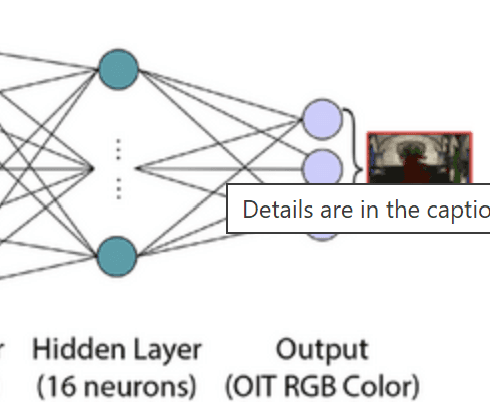
We introduce a shader-based neural network for efficient order-independent transparency (OIT). The method is fast, memory-efficient, scene-independent, and portable across commodity GPUs. A feature extraction pass feeds a pre-trained network that predicts the final OIT pixel color.

A Real-time Voice Interface for Intelligent Wheelchairs

S. Moschopoulos, I. Fudos, K. Koritsoglou, G. Tatsis, and Dimitrios Tzovaras

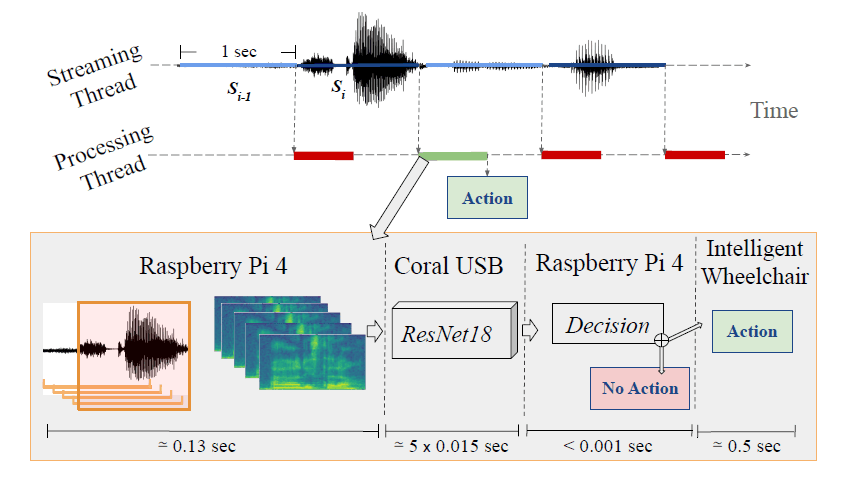
This paper reports on the development of a real-time voice interface for navigation purposes of electric wheelchairs. To this end, we employ a convolutional neural network trained and fine-tuned using a small dataset that consists of Greek commands. Furthermore, the study explores a highly quantized version of the network to achieve computational efficiency while maintaining high accuracy on an edge device. The experimental results confirm the effectiveness of the model in accurately detecting keywords in real time with minimal misclassifications.

Seek and Go: Data, Algorithms, and Interactive Tools for Pedestrian Navigation

K. Koritsoglou, P. Laskas, V. Patras and I. Fudos

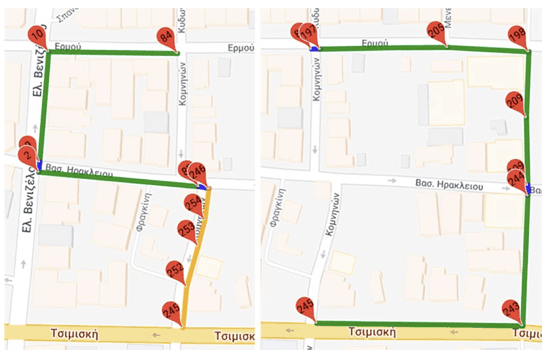
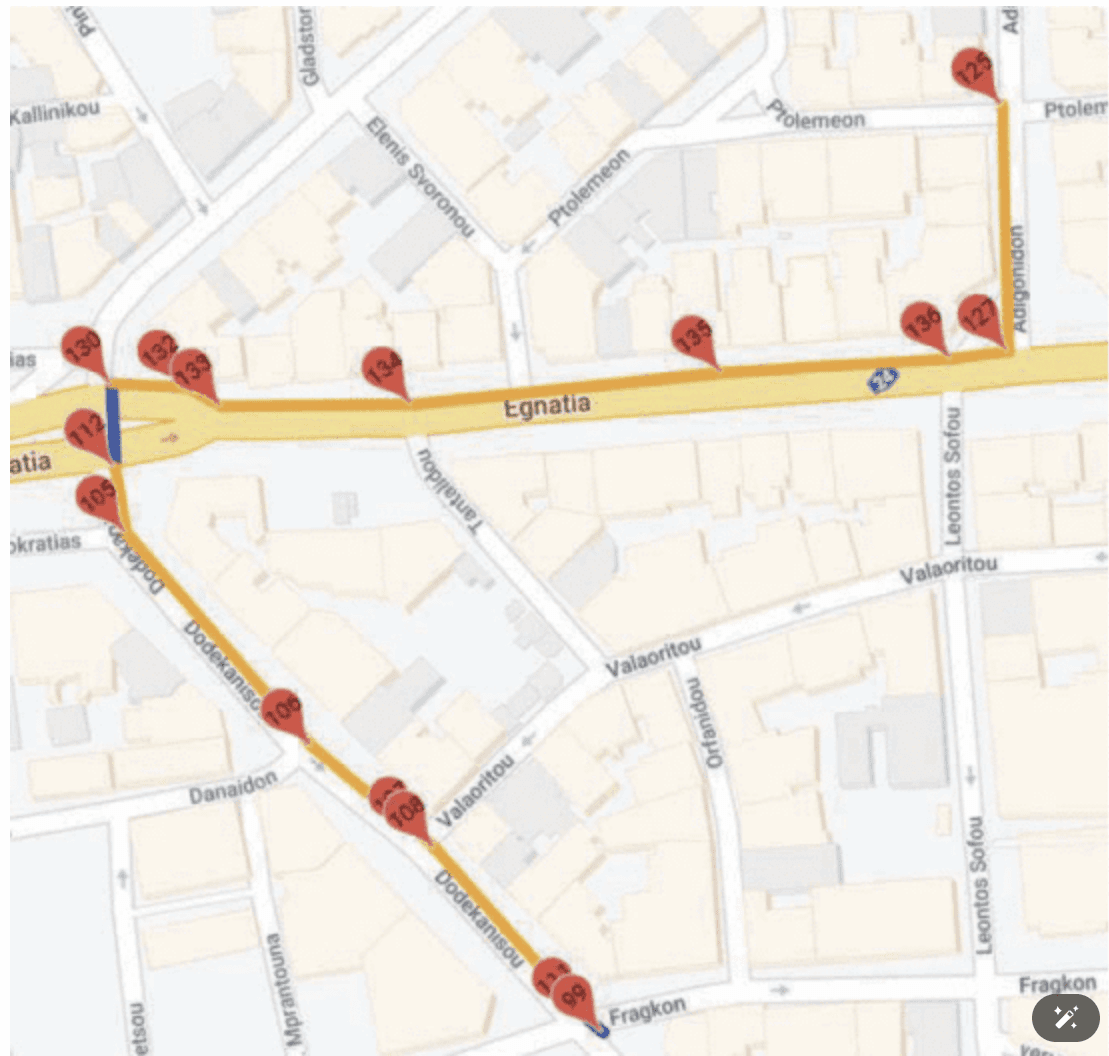
The paper presents Seek & Go, an innovative pedestrian navigation platform specifically designed for people with mobility impairments and special accessibility needs in urban environments. It introduces a structured data model that captures detailed accessibility information missing from conventional map services and demonstrates its application in a pilot case in the historical center of Thessaloniki.

Introducing a high-accuracy brain-computer interface (BCI) for intelligent wheelchairs

N. Amvazas, S. Moschopoulos, K. Koritsoglou, G. Tatsis, I. Fudos, and D. Tzovaras

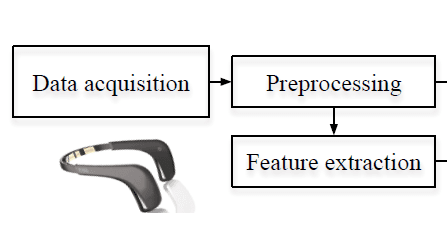
Best paper award: A cutting-edge brain-computer interface (BCI) network that leverages the sensor output of a low cost electroencephalogram (EEG) headband to detect specific eye and head movements, enabling intelligent wheelchair navigation. Using a hybrid CNN-LSTM architecture, our method achieves high accuracy classification of these movements while maintaining low inference time on the complete EEG signal. To validate our approach, we conducted a comprehensive experimental evaluation

Predicting geometric errors and failures in additive manufacturing

Margarita Ntousia, Ioannis Fudos, Spyridon Moschopoulos, and Vasiliki Stamati

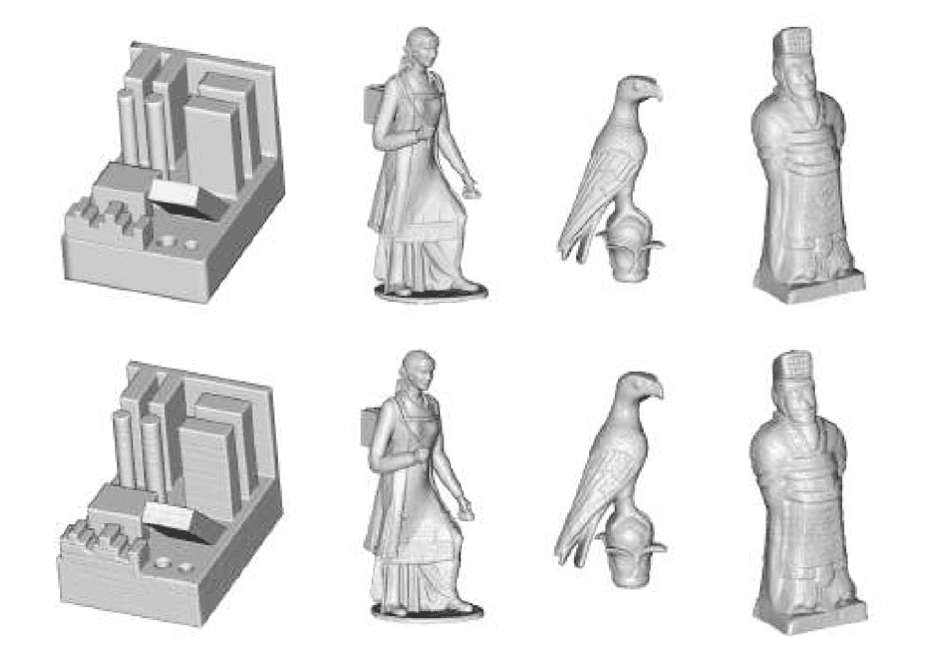
This study presents a method for predicting dimensional errors with high accuracy and a completely novel approach for estimating the probability of a CAD model to be fabricated without significant failures or errors that make it inappropriate for a specific application.

A bi-directional shortest path calculation speed up technique for RDBMS

K. Koritsoglou, P. Laskas, V. Patras, A. D. Boursianis, K. Grigoriadis and I. Fudos

The paper presents a purely relational method for efficiently querying large graph datasets in RDBMSs, avoiding non-standard aggregates or external plugin layers by relying solely on the native SQL query analyzer. It shows that a bidirectional BFS algorithm that traverses via carefully chosen pivot points enables querying substantially larger graphs than conventional complex SQL queries can handle, without incurring significant overhead.
Deep hybrid order-independent transparency

Grigoris Tsopouridis, Ioannis Fudos, Andreas-Alexandros Vasilakis

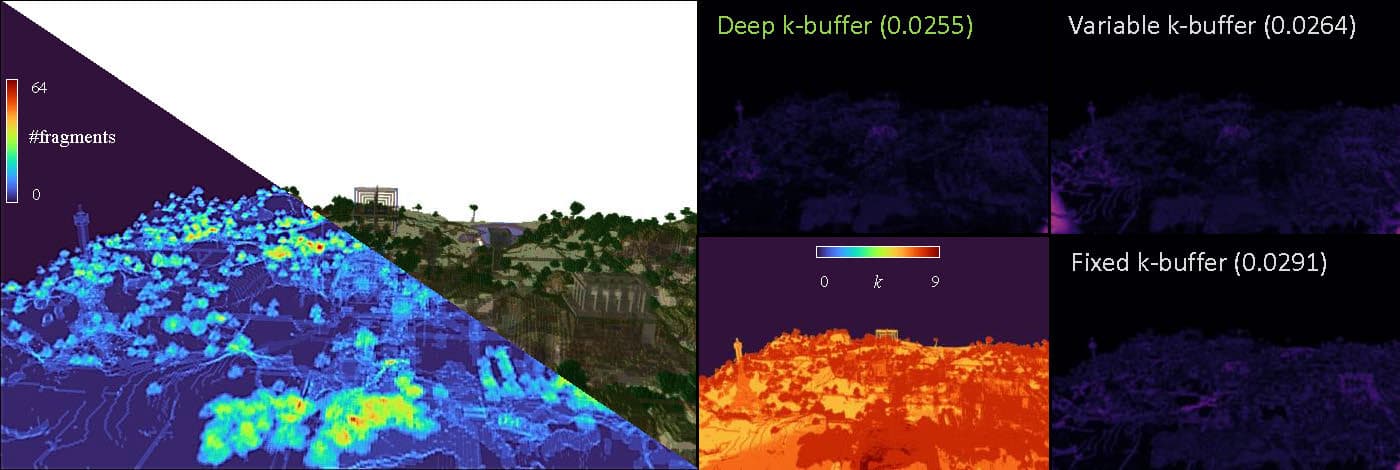
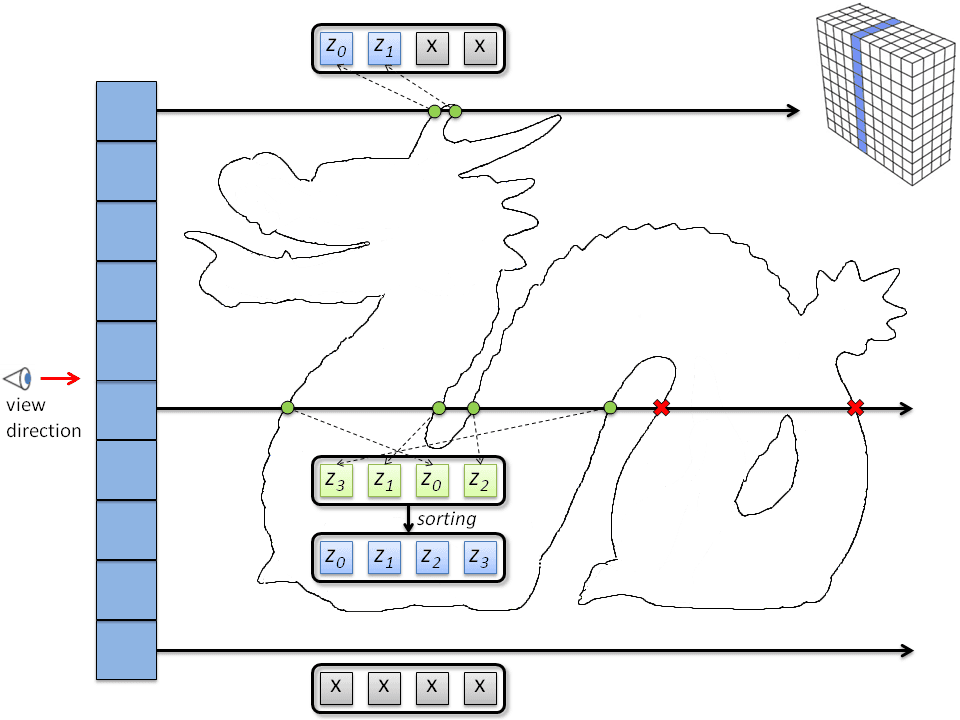
The paper introduces an intelligent k-buffer technique for real-time order-independent transparency that uses deep learning to predict a non-uniform, per-pixel fragment allocation, improving memory utilization and reducing view-dependent artifacts. A hybrid scheme for approximating non-significant fragments further refines final color estimation, and experiments show superior transparency quality in complex scenes compared to prior methods.

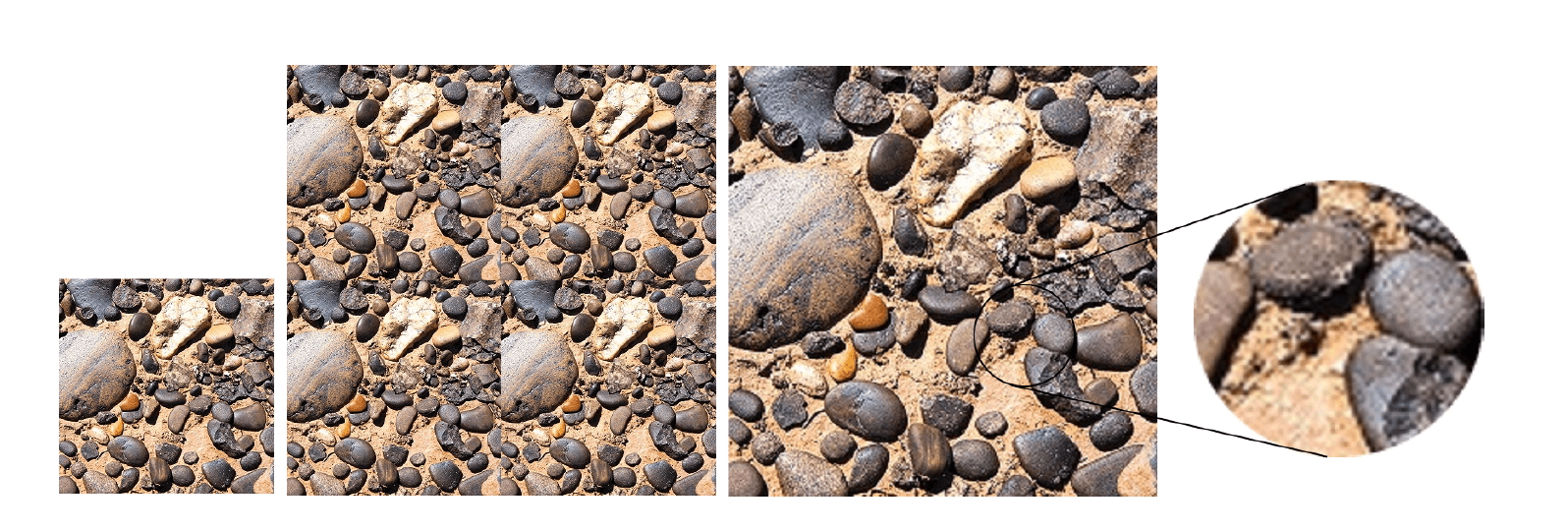
Deep Tiling: Texture Tile Synthesis Using a Constant Space Deep Learning Approach

Vasilis Toulatzis, and Ioannis Fudos

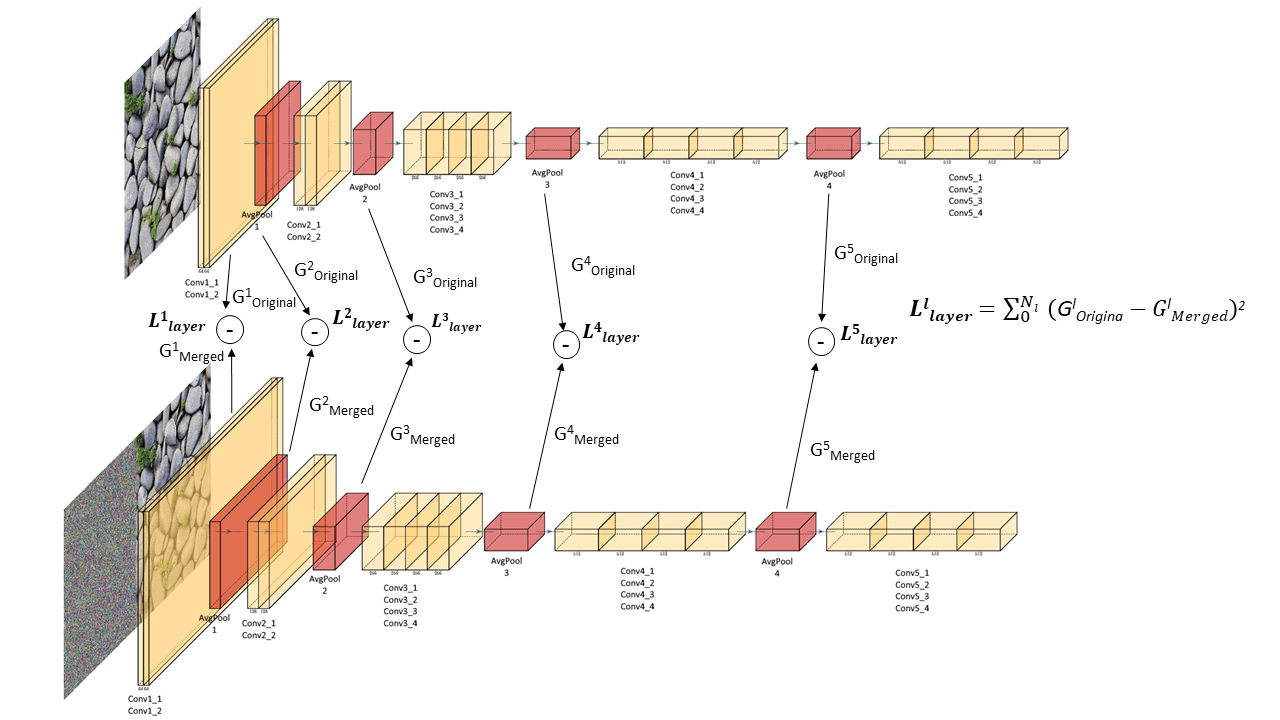
The paper presents a deep learning–based example-driven texture synthesis method that generates texture tiles of arbitrary resolution, closely matching the structural properties of an input texture. By synthesizing and incrementally merging small tiles, the approach overcomes GPU memory limitations and enables filling in missing regions of large textures.

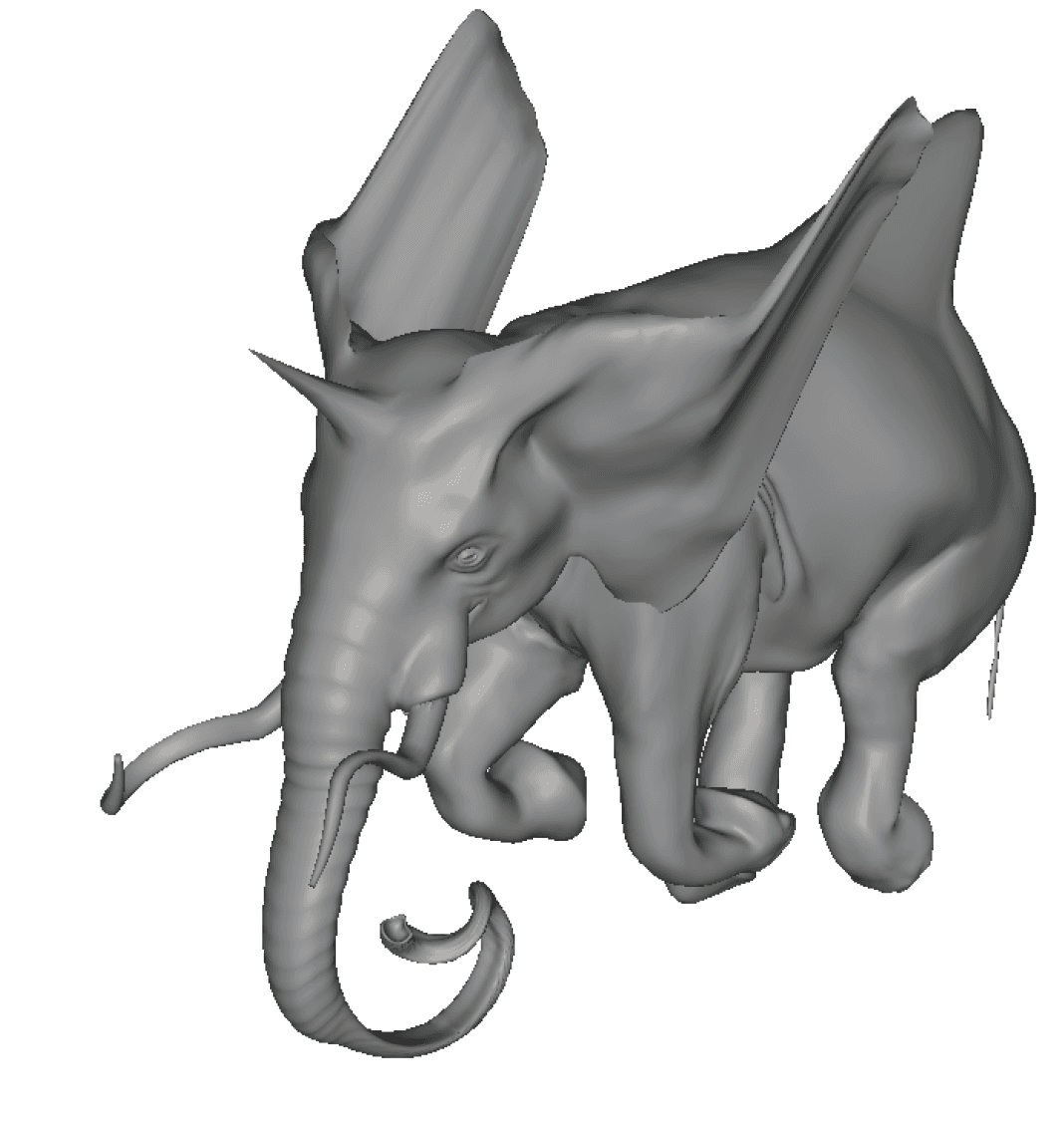
Temporal Parameter-free Deep Skinning of Animated Meshes

A. Moutafidou, V. Toulatzis, and I. Fudos

The paper introduces a deep learning–based animation compression method that learns to assign vertices to bone-influenced clusters and compute skinning weights from training data of vertex trajectories and corresponding weights from fully rigged characters. This approach achieves significantly lower approximation error with fewer bones, converges in fewer iterations, and operates without user-defined parameters compared to previous clustering-based methods.

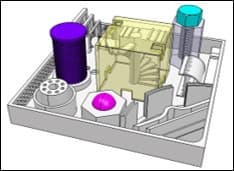
A Characterization of 3D Printability

I. Fudos, M. Ntousia, V. Stamati, P. Charalampous, Th. Kontodina, I. Kostavelis, D. Tzovaras and L. Bilalis

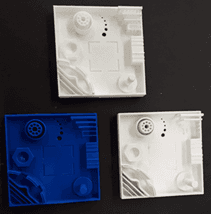
The paper proposes a method to quantify the printability of a 3D model on a specific additive manufacturing (AM) machine by analyzing mesh complexity and key design features, yielding a printability score that reflects the probability of achieving a robust and accurate print. This score can guide both technology selection and model redesign, and the framework is validated through experiments on benchmark models printed with three different AM technologies: FDM, Binder Jetting, and Material Jetting.

A Mesh Correspondence Approach for Efficient Animation Transfer

A. Moutafidou and I. Fudos

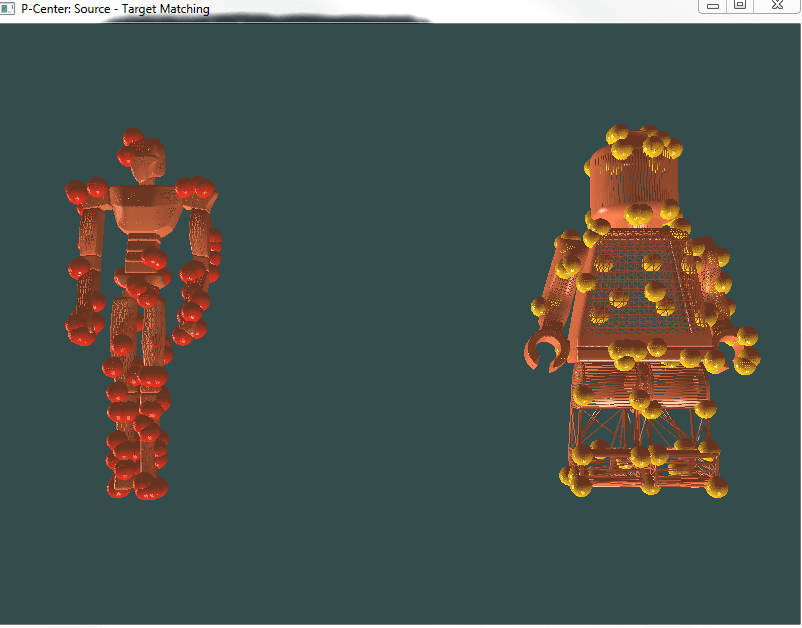
The paper presents a user-friendly, semi-automated method for transferring animation to novel characters in two stages: mesh correspondence and skeleton/skinning transfer, implemented in a dedicated software tool without third-party dependencies. This approach streamlines the animation pipeline, reduces manual effort and artifacts, and demonstrates improved efficiency compared to prior methods through comparative performance evaluation.

Deep Terrain Expansion: Terrain Texture Synthesis with Deep Learning

Vasileios Toulatzis, and Ioannis Fudos

The paper addresses the challenge of generating realistic, high-resolution terrain textures when only limited or low-resolution texture data is available, where simple tiling or enlargement produces visual artifacts. It proposes a novel texture synthesis and expansion method that improves terrain appearance and can also be applied to other domains, including the creation of smaller textures.

3D Printing Technologies and Applications: An Overview

Margarita Ntousia, Ioannis Fudos

he paper surveys and compares major 3D printing (additive manufacturing) technologies and materials with respect to accuracy, functionality, usability, and typical application domains. By highlighting common geometric defects in printed models—such as thin faces, overlaps, gaps, non-manifold structures, and self-intersections—it lays groundwork for future analysis of technology-specific geometric issues and their frequency of occurrence.

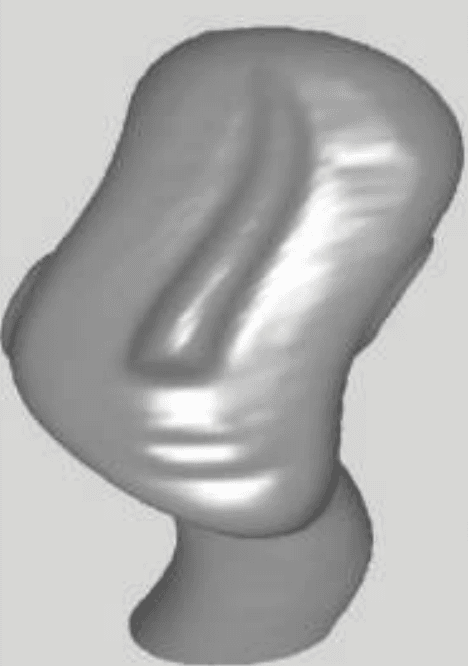
Editing Operators for Cross-Sectional Data-Sets

Ioannis Kyriazis and Ioannis Fudos

The paper presents a suite of automated editing operators for free-form 3D models represented as generalized cylinders, enabling users to modify models according to their intentions. Central to the method is a newly defined curve of centroids, which supports high-level, parameter-controlled edits applicable to diverse scenarios such as reverse engineering, digital reconstruction, medical simulations, and artistic modeling.

Realistic Rendering of Material Aging for Artwork Objects

Anastasia Moutafidou, Ioannis Fudos

The paper presents a method for modeling and simulating material aging effects—specifically local deformations from corrosion, erosion, and cracking—based on micro-profilometry measurements of surface texture and roughness at the micrometric level. Using models derived from emulated aging experiments on material samples, the approach enables more realistic rendering of aged artwork objects by capturing time-varying surface deformations.

Multiple Material Layer Visualization for Cultural Heritage Artifacts

Anastasia Moutafidou, Georgios Adamopoulos, Anastasios Drosou, Dimitrios Tzovaras, Ioannis Fudos

The paper presents software tools for visualizing material aging effects on cultural heritage objects, accounting for factors such as material composition, usage, weathering, and subsurface changes. Leveraging recent 3D printing capabilities with transparency, these tools help curators and archaeologists better understand, predict, and mitigate aging with minimal preservation intervention.

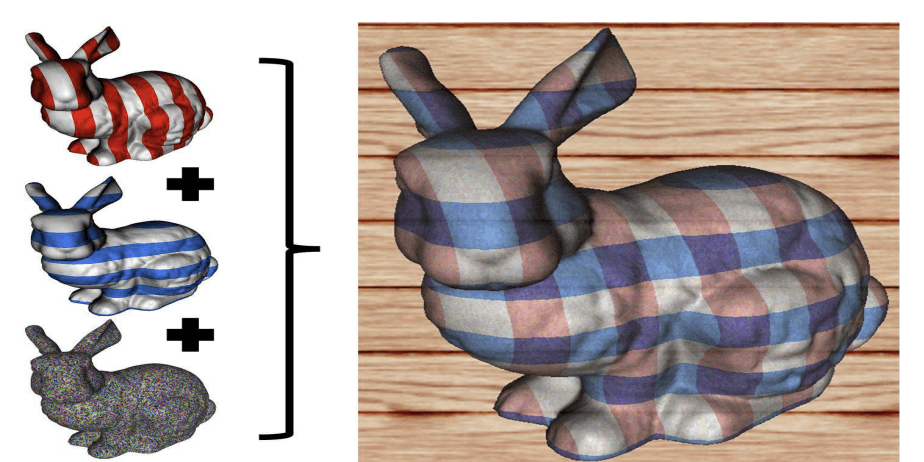
Multifragment Renderer for Material Aging Visualization

Georgios Adamopoulos, Anastasia Moutafidou, Anastasios Drosou, Dimitrios Tzovaras, Ioannis Fudos

The paper introduces a multifragment renderer for visualizing and combining simulated aging effects on artwork surfaces, including changes in color, fading, deformations, and cracks, as well as subsurface material alterations. These tools support curators and conservators in understanding how visual appearance and material properties evolve over time under specific environmental conditions, aiding in minimal yet effective preservation.

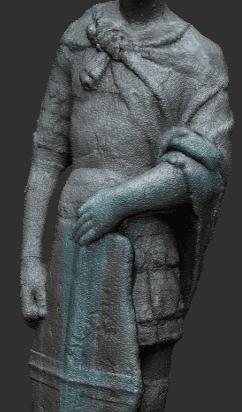
Reconstruction and Visualization of Cultural Heritage Artwork Objects

Anastasia Moutafidou, Ioannis Fudos, George Adamopoulos, Anastasios Drosou, Dimitrios Tzovaras

The paper presents methods for digitally reconstructing and visualizing cultural heritage objects that account not only for their overall geometry but also for material consistency and fine-scale micro-structure such as dents, bumps, and cracks. By integrating diverse sensor data, including those that reveal subsurface material layers, the approach produces richer 3D models that capture both external surfaces and internal material characteristics.

Tree Decomposable and Underconstrained Geometric Constraint Problems

I. Fudos, C. Hoffmann, R. Joan-Arinyo

The paper surveys geometric constraint solvers for static problems, emphasizing that they must avoid false positives and that their competence is measured by their ability to find existing solutions. Focusing on approaches rooted in mechanical CAD, it highlights methods that perform a graph-based structural analysis to decompose problems into generic subproblems, which are then solved and recombined by algebraic solvers, and notes how fast static solvers can underpin dynamic geometry systems.

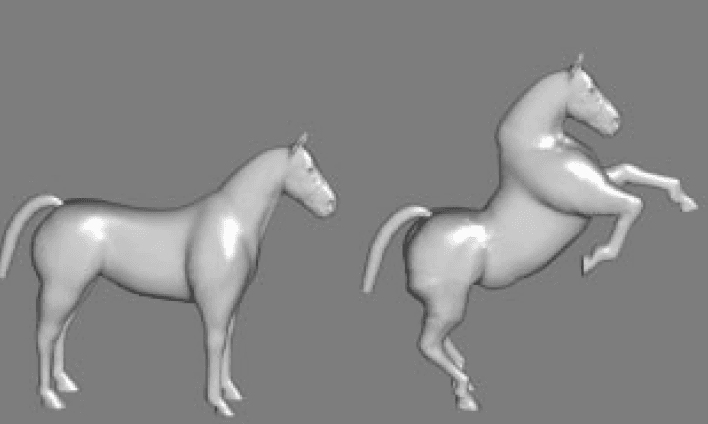
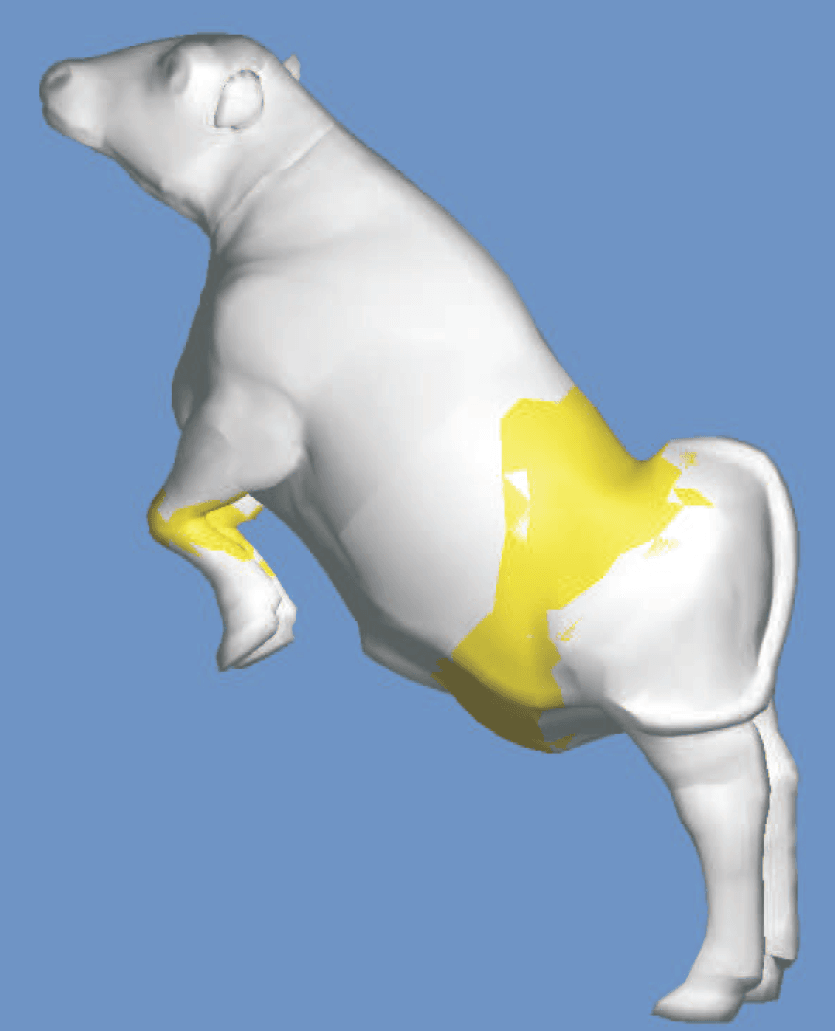
PPS: Pose-to-Pose Skinning of Animated Meshes

Andreas A. Vasilakis, Ioannis Fudos, and George Antonopoulos

We present a pose-to-pose approach to skinning animated meshes by observing that only small deformation variations will normally occur between consecutive poses. The transformations are applied so that a new pose is derived by deforming the geometry of the previous pose, thus maintaining temporal coherence in the parameter space, reducing approximation error and facilitating forward propagated editing of arbitrary poses.

k+-buffer: An Efficient, Memory-Friendly and Dynamic k-buffer Framework

A. A. Vasilakis, G. Papaioannou, I. Fudos

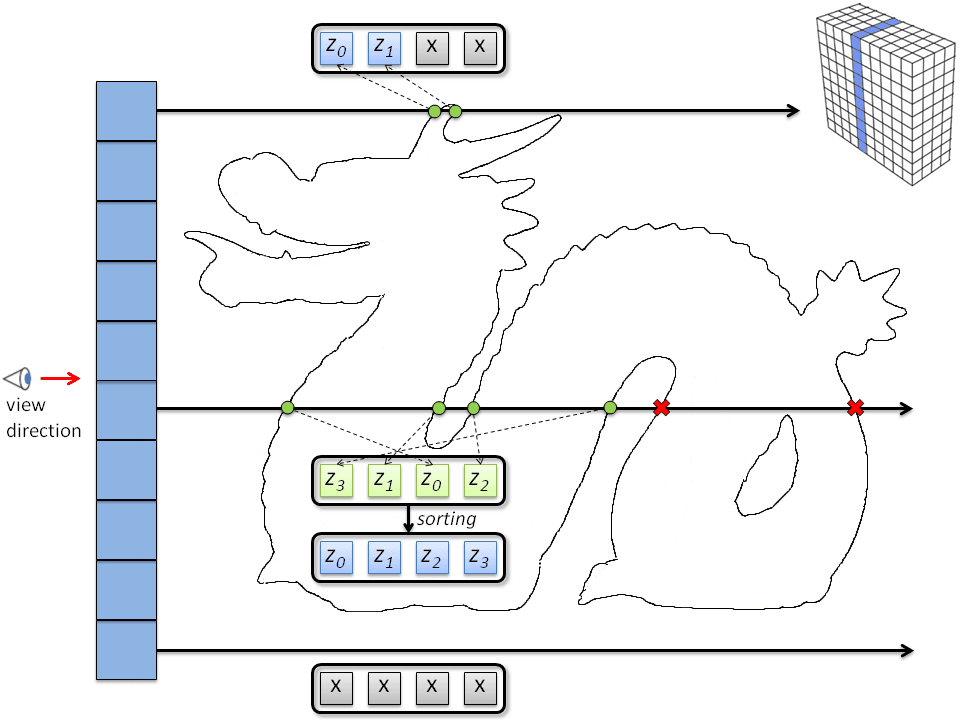
The paper introduces k+-buffer, a fast, single-pass framework that simulates k-buffer behavior using two GPU data structures (max-array and max-heap) to maintain the k-closest fragments per pixel while exploiting pixel synchronization and fragment culling. It further presents memory-aware strategies for adaptive per-pixel allocation, k-size selection via depth histograms, and fixed-memory depth sorting, achieving better memory usage, performance, and image quality than previous k-buffer variants.

Pose Partitioning for Multi-resolution Segmentation of Arbitrary Mesh Animations

A. Vasilakis and I. Fudos

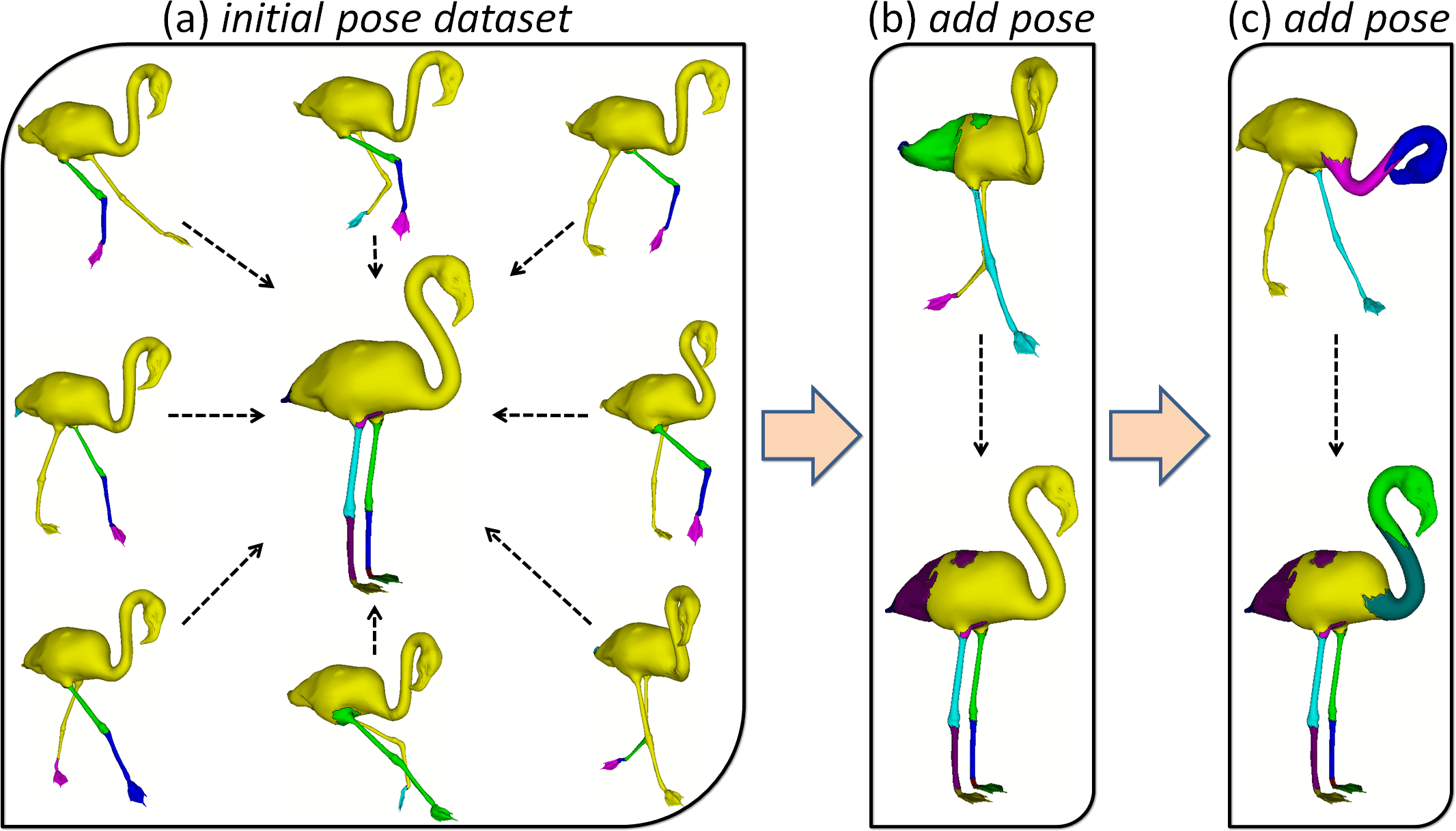
The paper proposes an efficient method for generating varying level-of-detail segmentations of arbitrary animated meshes by first constructing an over-segmentation across poses, then applying progressive simplification that favors rigid segments. The resulting segmentation adapts easily to pose edits or insertions, provides smooth pose-to-pose transitions with perceptually consistent segment coloring, and shows improved efficiency and quality over previous techniques on both skeletal and highly deformable animations.

k+-buffer - Fragment Synchronized k-buffer

A. Vasilakis and I. Fudos

The paper introduces k+-buffer, a fast and accurate multi-fragment rendering framework that simulates k-buffer behavior in a single geometry pass using two GPU data structures (max-array and max-heap) to maintain the k-closest fragments per pixel via fragment culling and pixel synchronization. It can flexibly operate as a Z-buffer or A-buffer without redesign, incorporates a dynamic memory-saving strategy, and outperforms previous k-buffer variants in memory usage, performance, and image quality.

Direct Rendering of Boolean Combinations of Self-trimmed Surfaces

J. Rossignac, I. Fudos and A. Vasilakis

The paper defines semantics for solids bounded by self-crossing surfaces by introducing rules to classify interior and exterior components during continuous deformations of an initial non-self-intersecting manifold. It presents real-time GPU rasterization algorithms to render the “trimmed” subset of the surface (the regularized union boundary) without explicitly computing self-intersections, enabling animations, Boolean operations, and view-dependent adaptive tessellation for such solids.
Depth-fighting Aware Methods for Multi-fragment Rendering

A. Vasilakis and I. Fudos

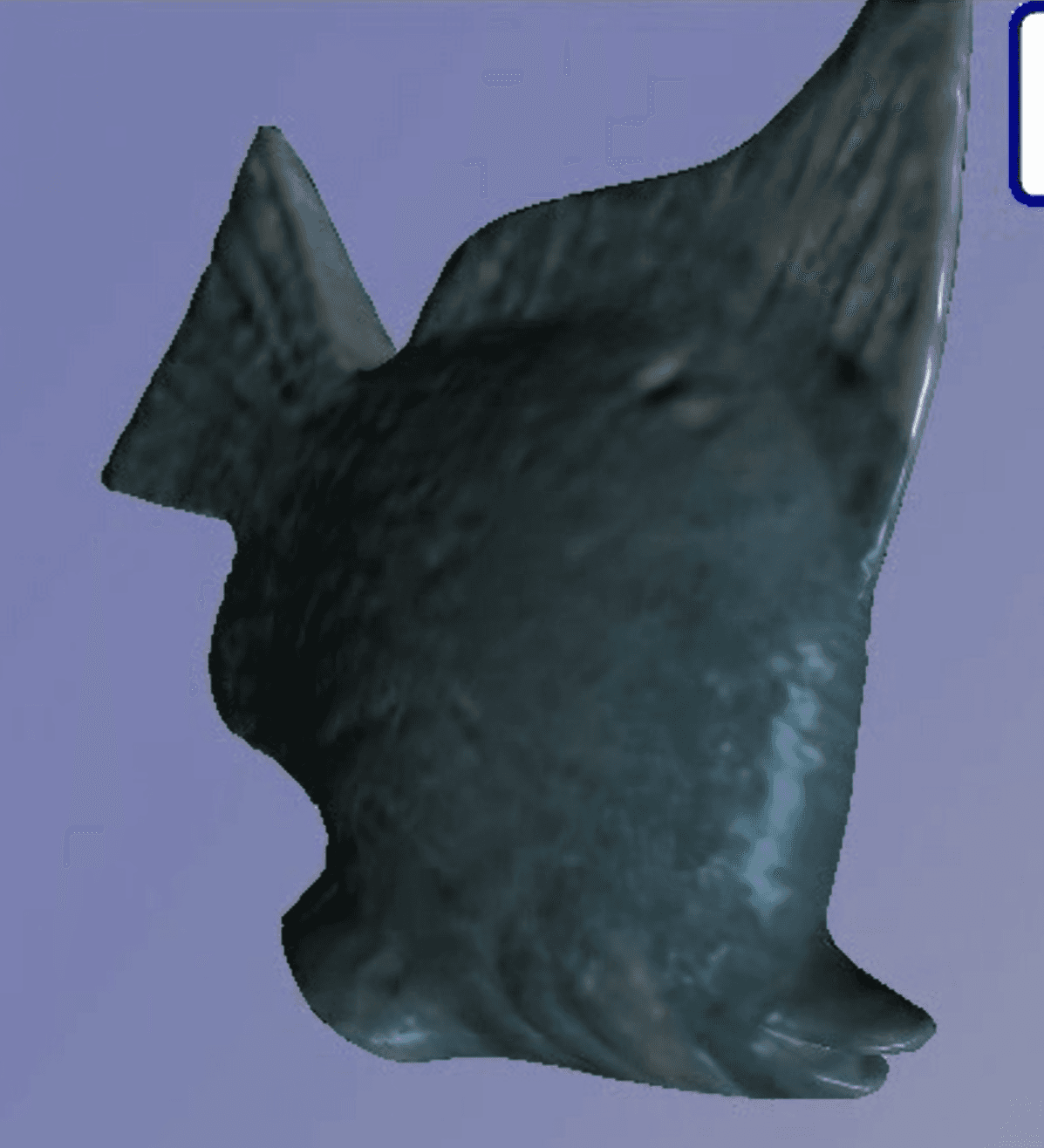
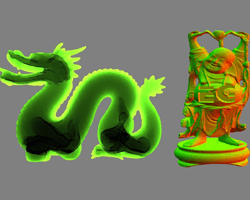
The paper develops depth-fighting–aware multifragment rasterization algorithms that reduce, eliminate, or detect artifacts caused by coplanar geometry (Z-fighting) when multiple fragments share identical depth at a pixel. By adapting single- and multi-pass methods for both commodity and modern GPUs, it offers efficient, robust alternatives whose effectiveness is demonstrated through comparisons and visual results in depth-critical applications.

Efficient computation of constrained parameterizations on parallel platforms

Theodoros Athanasiadis, Georgios Zioupos and Ioannis Fudos

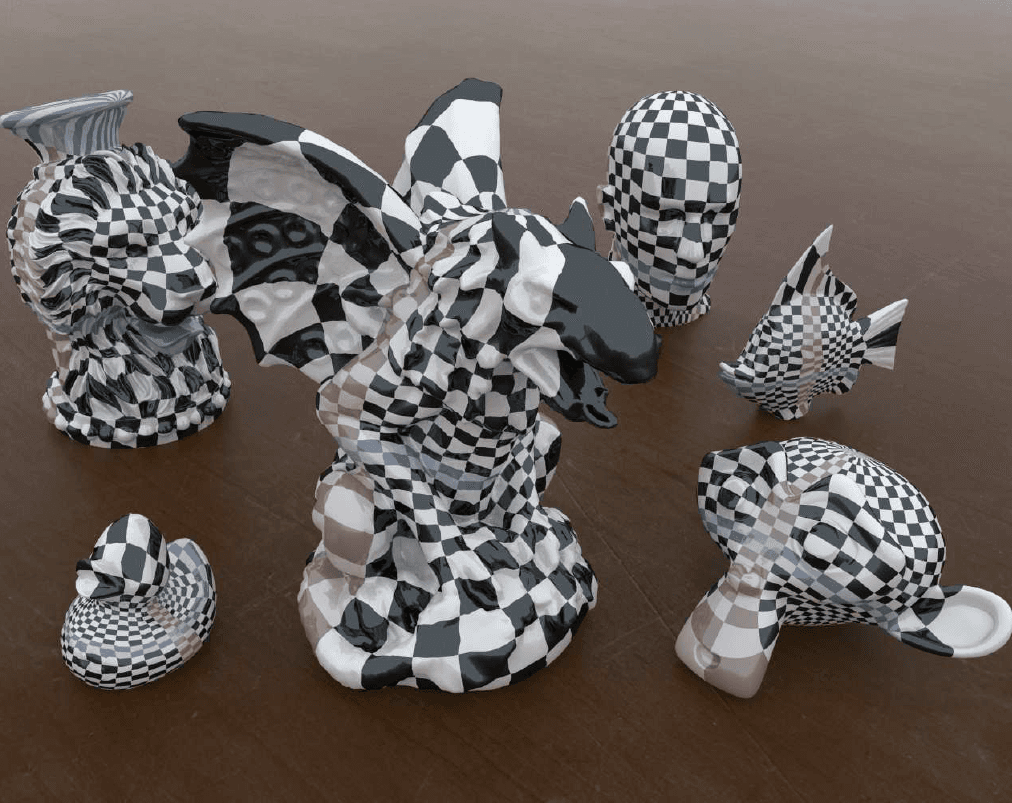
We present a non linear solver developed on OpenCL that is efficiently parallelizable on modern massively parallel architectures. We establish how parameterization relates to mesh smoothing and show how to ciently and robustly solve the planar mesh parameterization problem with constraints. Furthermore, we demonstrate the applicability of our approach to real-time cut-and-paste editing and interactive mesh deformation.

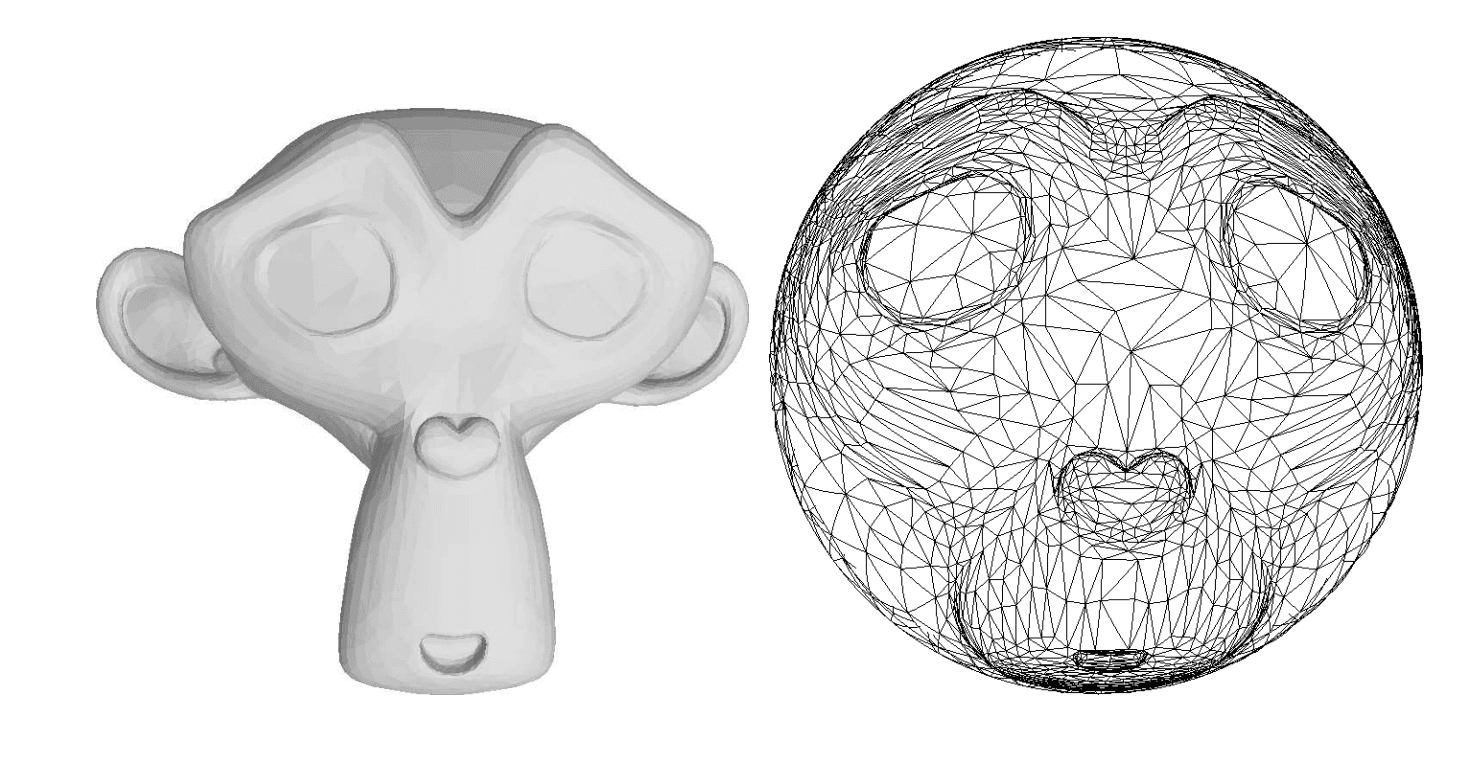
Feature-based Morphing based on Geometrically Constrained Spherical Parameterization

Th. Athanasiadis, I. Fudos, C. Nikou and V. Stamati

The paper presents a feature-based 3D morphing technique for genus-0 polyhedral CAD models, built on a sphere parameterization optimized to preserve topology, connectivity, and polygonal correspondence via geometric constraints. It further introduces a fully automated method that detects and matches feature regions between source and target models using feature-graph pattern matching, enabling alignment and morphing without user intervention.

GPU Rigid Skinning based on a Refined Skeletonization Method

A. Vasilakis and I. Fudos

The paper presents a skeletal rigid skinning framework that first extracts refined animation-ready skeletons from decomposed character models, then applies a robust rigid skinning method using blending patches around joints to avoid common artifacts. All stages are implemented efficiently on the GPU for real-time animation, and the approach is evaluated in terms of efficiency, quality, scope, and robustness.

Z-fighting Aware Depth Peeling

A. Vasilakis and I. Fudos

The paper introduces a depth peeling technique for commodity GPUs that fully handles Z-fighting by extending front-to-back (F2B) depth peeling with a single extra geometry pass, ensuring that all coplanar fragments are correctly captured. It also proposes an approximate, Z-fighting–free variant that accelerates rendering in scenes with many equal-depth layers by combining F2B depth peeling with k-buffer methods.

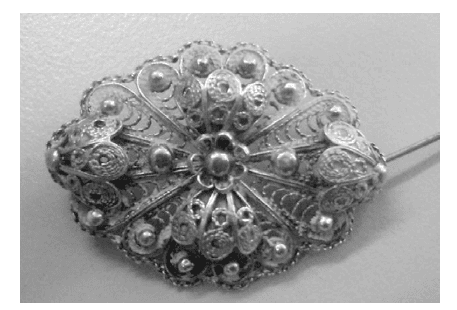
A Parametric Feature-based Approach to Reconstructing Traditional Filigree Jewelry

Vasiliki Stamati, George Antonopoulos

The paper introduces ReJCAD, a CAD-based framework for reconstructing traditional filigree jewelry from high-accuracy point clouds, using a library of parametric, constraint-based solid patterns (spirals, arcs, braids) optimized for aesthetic fairness and manufacturability. Through interactive feature detection and pattern fitting, the system assembles editable, re-parameterizable solid models suitable for customization and production, demonstrated on a 19th-century filigree brooch from northwestern Greece.

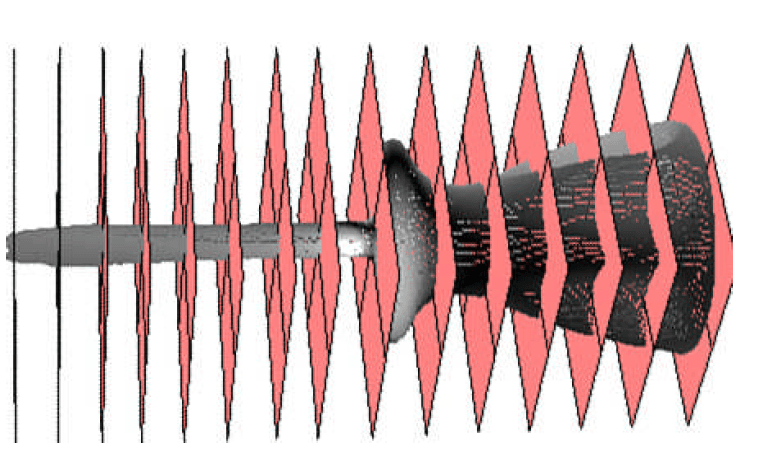
A Feature-Based Approach to Re-engineering CAD Models from Cross-sections

A. Protopsaltis and I. Fudos

The paper presents a method for reconstructing 3D objects from cross-sectional point clouds by thinning planar point clusters, optimally fitting them with piecewise quadratic rational Bézier curves, and using representative curve points to rebuild the surface under inter- and intra-section constraints that support parameterization and editing. To handle shape and topological changes between adjacent contours, it leverages contour skeletons to generate intermediate cross sections at branching regions, enabling robust meshing and is demonstrated through an efficient proof-of-concept implementation.

On Reconstructing 3D Feature Boundaries

I. Fudos and V. Stamati

In this paper we present a curve approximation method used in a feature-based approach to building feature-based CAD models from 3D point clouds.

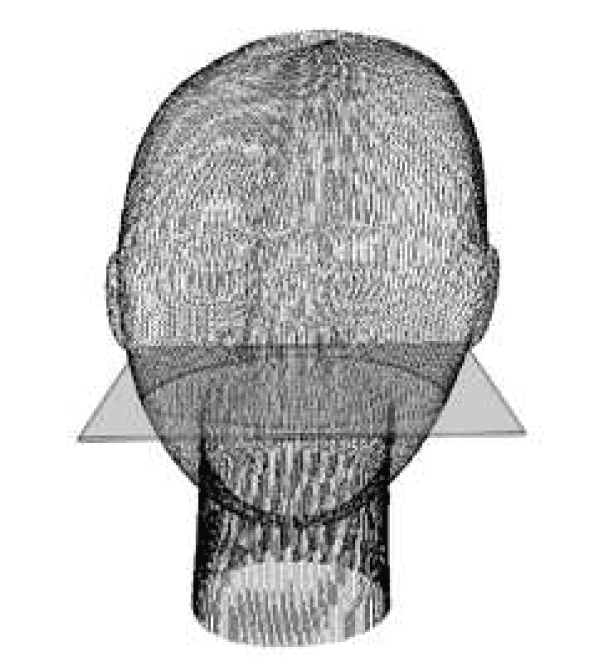
Detecting Features from Sliced Point Clouds

I. Kyriazis, I. Fudos and I. Palios

We present a new method for extracting the feature primitives of a 3D object directly from the point cloud of its surface scan. For the extraction of the feature points and the interpolating curve patches we use properties of the convex hull and the voronoi diagram of the point cloud.

Using Poxels for Reproducing Traditional Pierced Byzantine Jewellery

V. Stamati, I. Fudos, S. Theodoridou, C. Edipidi and Avramidis

In this paper, we introduce an approach to reproducing traditional pierced Byzantine jewellery using pierced voxels (“poxels”). Poxels are voxels with specific attributes and properties that are appropriately combined to create large complex pierced designs.