
Abstract
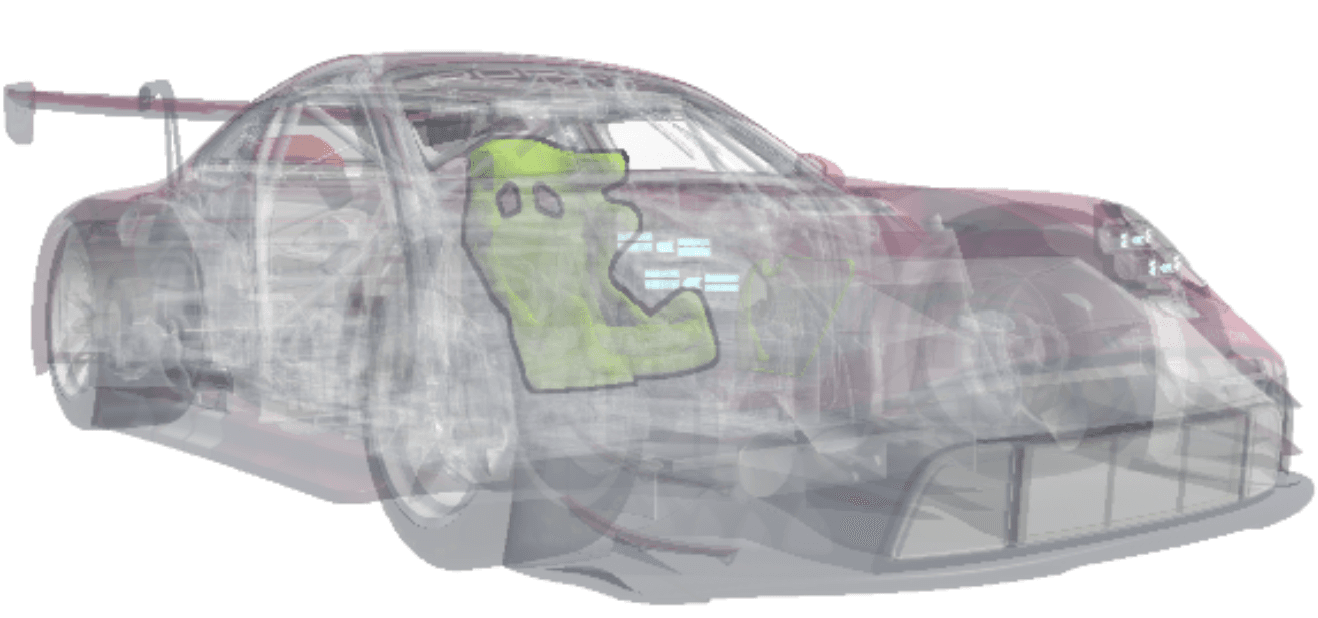
This paper surveys the state of transparency rendering in Computer-Aided Design (CAD), with a focus on both practical deployment in industrial systems and the underlying algorithms. We first review current approaches to transparency rendering in CAD environments and outline application scenarios in which accurate and performant transparency is critical for design inspection, communication, and decision-making. We then analyze the trade-offs between approximate and exact transparency techniques, comparing their performance-quality balance on desktop and mobile platforms and discussing criteria for selecting appropriate methods. The survey further identifies the need for robust benchmarks, quality metrics, and evaluation methodologies tailored to CAD-specific visualization tasks. We examine techniques for emphasizing important interior components such as importance-driven transparency, silhouette-based methods, and related approaches to support effective spatial understanding in complex assemblies. Finally, we discuss the unique challenges of rendering transparent constructive solid geometry (CSG) objects, including robustness, correctness, and integration with modern rendering pipelines. Collectively, these contributions characterize current capabilities, systematize open problems, and outline future research directions for transparency rendering in CAD visualization. See also demo video.
BibTeX Citation
@article{cad2026fudos,
  title={Transparency Rendering in Computer-Aided Design: Methodologies, Trade-offs, and Challenges},
  author={G. Tsopouridis and I. Fudos},
  journal={CAD Conference Keynote, Computer-Aided Design \& Applications},
  volume={24},
  number={2},
  year={2026},
  doi={10.14733/cadaps.2027.133-151}
}